Listen to the Bird Sounds
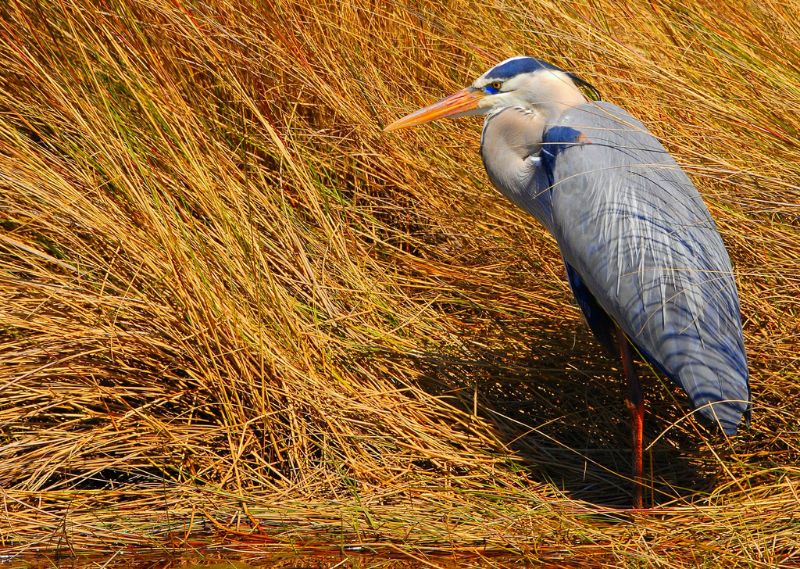
Great blue heron
A Great blue heron is one of those birds that makes you doubt whether it is real or is it a figment of imagination. Herons have long and slender legs and sinuous necks that make them look like question marks.
They are the largest kind of their species. Compared to a Great Egret they’re taller and much heavier, but they’re smaller and leaner than a Sandhill crane. They measure 38.2-53.9 in (97-137 cm) in length and weigh around 74.1-88.2 oz (2100-2500 g).
These herons have a pale blue-gray body that makes them aesthetically pleasing. They also have a wide black stripe over their eyes which gives them style.
These herons may live anywhere with water. So you can look for them in places like marshes, riverbanks, lakes, sloughs, open coasts, and backyard goldfish ponds. These herons usually stand like a statue or wade in shallow waters to look for fish. They may also eat salamanders, snakes, turtles, frogs, rodents, insects, and birds Once they’ve chosen prey, they use their sharp strong bills like a spear to catch them. Unlike how they hunt on the ground, herons choose places high off the ground to build their nests.