Listen to the Bird Sounds
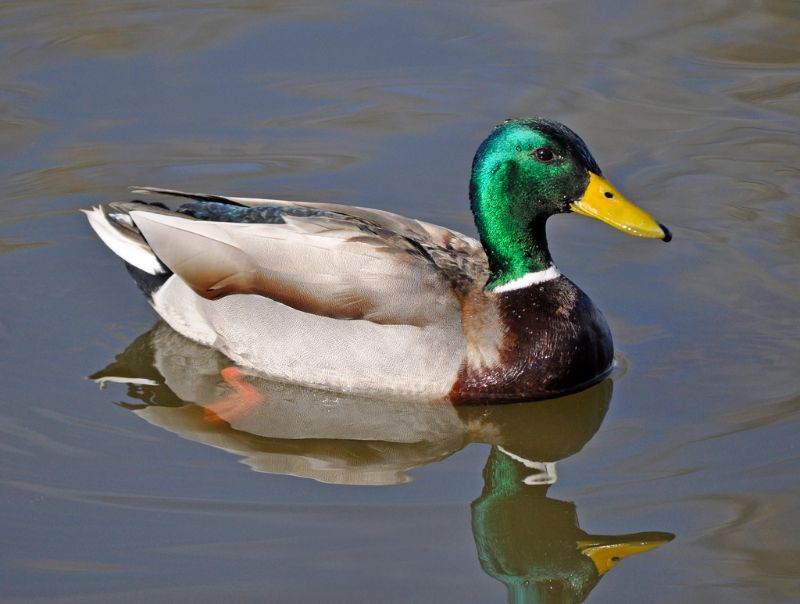
Mallard
Mallards are like most ducks, but they’re relatively larger than most of them. These ducks weigh about 35.3-45.9 oz (1000-1300 g) and 19.7-25.6 in (50-65 cm) in length. They’re fairly larger than teal and much smaller than a Canada Goose.
Mallards have an interesting color pattern, as the male of the species looks much different from the females and juveniles. The male is noticeable for his yellow bill and iridescent-green head. Although most of his body is brown, they turn into black on his rear. The female, however, has brown and orange bills with a mottled brown body.
Like most ducks, Mallard loves wet places, regardless of whether the place is natural or artificial.
So you can find them in ponds, rivers, lakes, marshes, city parks, and backyards. Mallards are considered dabbling ducks. This means they rarely dive into the water and rather lean forward and graze on underwater plants.
If you’re looking for a friendly duck, Mallards are the right choice for you. They can be easily tamed and gather around with other species of ducks. So if you ever see Mallards in city ponds, you might be friendly and you can approach them.